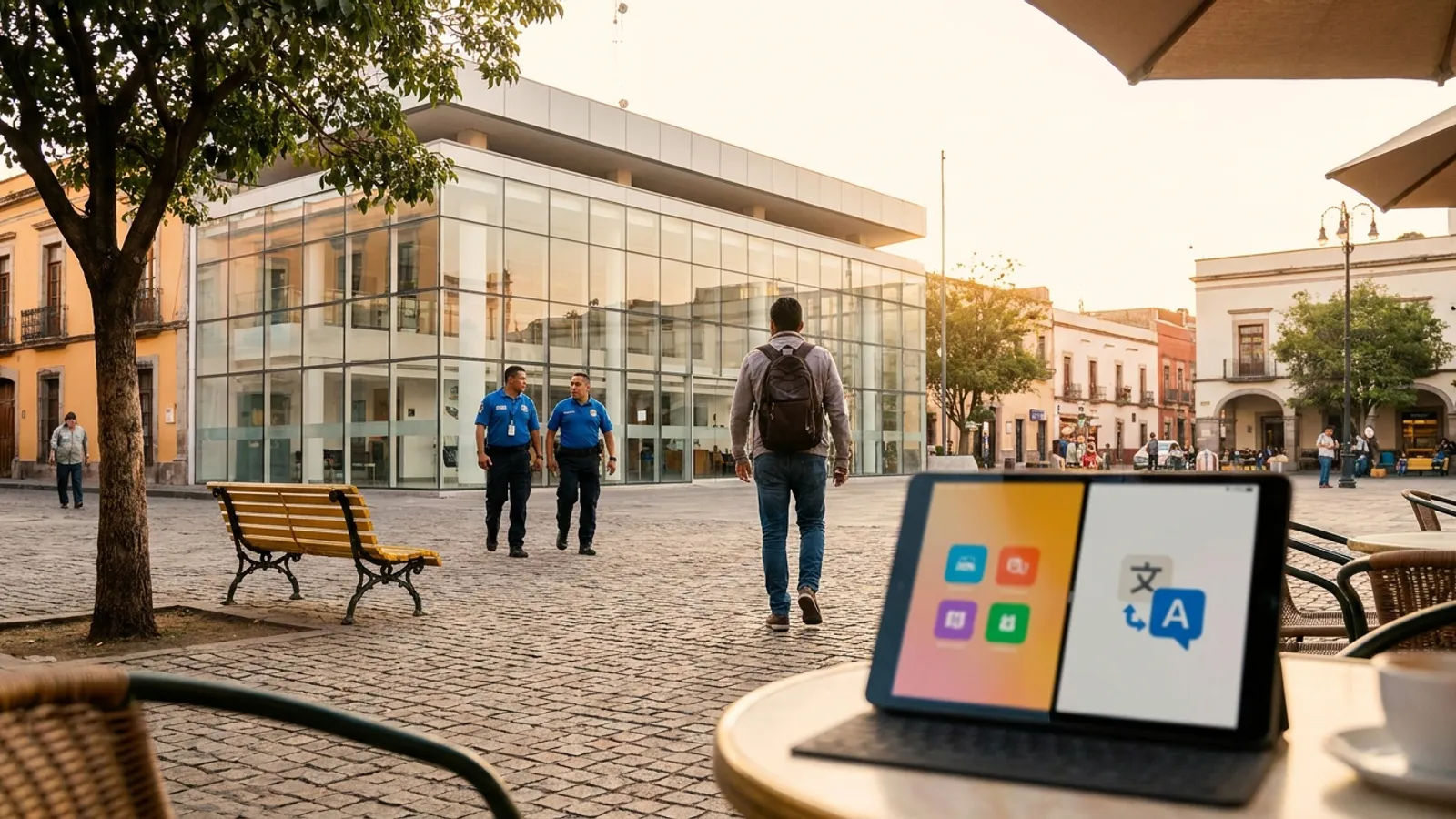
When a caller and a call-taker don't speak the same language, the call slows down at the worst possible moment. A 2013 study of 911 medical calls at two large call centers looked at calls with a language barrier. On those calls, assigning Basic Life Support took 33% longer on average, and assigning Advanced Life Support took 43% longer. Tackling this doesn't require a new CAD: an AI copilot can run on top of the one you have.
The AI sits on top, not in the way
OmniCall integrates with your center's existing phone system and CAD (Tyler, Hexagon, Motorola, or the state's own system). It runs in the cloud or in your own command center, with no migration:
- First ring, no menu: answers every call 24/7 in natural conversation, with no "press 1."
- Non-emergency calls (pranks, questions, misdials): resolves and closes them and records the reason. In Mexico, about 75% of 911 calls aren't real emergencies.
- Two-way translation without an interpreter: the caller speaks their own language (Spanish, Chinese, Portuguese, French…) and the call-taker reads the translation in English. When the call-taker replies, the caller hears a natural voice in their own language.
- Live transcription with 97% accuracy and CAD filled in under 2 seconds.
- Sound and emotion detection: gunshots, screams, breaking glass, and vehicle impacts; fear, panic, and anger.
- Auditable protocol guidance: next question, urgency classification, and recommended dispatch.
OmniCall vs. the usual setup
In the usual setup, the call depends on a call-taker being free, an outside interpreter is added to the call when there's a language barrier, and the call-taker enters everything into the CAD by hand.
| Criterion | Axentra OmniCall | Alternative |
|---|---|---|
| Answering | ✓ First ring, natural conversation | ✗ Depends on a free call-taker |
| Non-emergency calls | ✓ Resolved, reason recorded | ✗ Tie up call-takers |
| Language | ✓ Two-way translation, no interpreter | ~ Must connect an interpreter |
| Transcription | ✓ Live, 97% | ✗ Manual notes |
| CAD entry | ✓ Under 2 s | ✗ Manual |
| Sounds and emotions | ✓ Detected automatically | ✗ Call-taker's ear only |
| Protocol | ✓ Guided and auditable | ~ Depends on tooling |
| Existing phone and CAD | ✓ Integrates, no migration | ✓ Unchanged |
| Human in charge | ✓ Always | ✓ Always |
Bottom line: you keep what already works (your CAD, your phones, and your people) and add what the usual setup doesn't do.
A human is in charge of every emergency
OmniCall doesn't replace call-takers. In every real emergency, a person stays in charge and the AI works as their copilot. It takes the friction out of language, transcription, and CAD entry so the call-taker can focus on the caller. There are two pilot options. The first replays 10 recorded calls with known outcomes as if they were live. The second is a phone number with the system ready for your call-takers to test.
Modernizing dispatch doesn't have to mean ripping out the CAD. It can start by helping your center understand callers in their own language.
Want to see it on your center's stack? Talk to us.